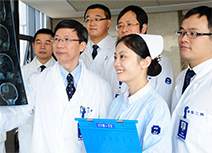
A 12-year-old girl from Russia who was paralyzed after a car accident has regained the ability to walk with assistance following closed-loop spinal cord neural interface implantation at the Second Affiliated Hospital Zhejiang University School of Medicine (SAHZU).
Vera sustained a severe spinal cord injury in a road accident that left her with lower-limb paralysis. Despite seeking treatment at multiple medical institutions in Russia, her family was unable to find a therapy that restored any meaningful motor function in her legs.
Vera's family then reached out to the Global Health Department at SAHZU. After a multidisciplinary team of experts reviewed her case through a remote consultation—carefully assessing her condition, weighing treatment risks, and evaluating the feasibility of long-distance travel—the team concluded that she was a candidate for the implantation.
In early April 2026, Vera traveled all the way to Hangzhou and was admitted to SAHZU. The team performed a comprehensive assessment of her neural conduction status using cortical, cervical, and thoracic spinal cord electrical stimulation combined with electromyography. The evaluation confirmed that she had an incomplete spinal cord injury—meaning that some neural pathways remained intact.
"Her neural pathways are not completely severed; there are still some 'sparks' left," said Prof. ZHU Junming, Vice Director of the Department of Neurosurgery at SAHZU. "What we need to do is amplify these weak signals and, through rehabilitation, help the nerves reconnect."
The Procedure
In the surgery, the team implanted stimulating electrodes on the dorsal side of Vera's spinal cord, along with a synchronized pulse generator. The system—developed independently by the team with full intellectual property rights—does not replace the brain's motor commands. Instead, it amplifies residual neural signals, helping them bypass the injured segment of the spinal cord and re‑activate lower-limb muscles.
Prof. XU Kedi from the College of Biomedical Engineering and Instrument Science at Zhejiang University and key member of the treatment team explained the core principle: "The spinal cord is like a highway. After injury, the passage narrows, and signals are too weak to drive muscles. Our technology uses electrical stimulation to amplify the remaining signals, making muscles more responsive to the brain's commands—this is truly 'voluntary walking'."
Because Vera is still growing, the team specially designed the electrode placement and fixation to accommodate her future height increase. Compared to earlier cases, this surgery also achieved independent control of left and right leg movements, and incorporated artificial intelligence algorithms to fine‑tune stimulation parameters for precise gait adaptation.
Recovery Progress
One month after surgery, Vera was able to stand stably with assistive devices. Her sensation in the soles of her feet gradually returned, and her hip joint mobility continued to improve.
By three months post‑surgery, she could walk forward independently with a walker—a movement driven not by passive muscle twitching from electrical stimulation, but by her own will.
The medical team's next goal is to help Vera walk without a walker and achieve independence in daily activities.
Broader Impact
Vera is the first international patient with severe spinal cord injury implated with through this closed‑loop spinal cord neuromodulation system, to achieve assisted walking in China.
To date, more than 20 patients with spinal cord injuries have undergone the same procedure at SAHZU and achieved varying degrees of functional recovery through postoperative rehabilitation.
The first Chinese patient to receive this surgery—a 61‑year‑old man—was able to bend and lift his legs on the third day after surgery, and stood and walked independently on day 15. He now walks with a cane and, at times, without any support.
Another patient, a 52‑year‑old teacher, has recovered significant lower‑limb function and has returned to teaching and daily life.
In April 2026, Zhejiang Province's first integrated clinical research ward for EES (epidural electrical stimulation) surgery and postoperative rehabilitation was officially opened at SAHZU's Pan‑Vascular and Metabolic Center (Bo'ao Campus), marking the transition of this technology from clinical trials toward routine practice.
Looking Ahead
"This technology has now formed a replicable, standardized pathway," said Prof. Chen Gao, Chair of the Department of Neurosurgery at SAHZU. "We are refining the full‑process protocols—from patient screening to rehabilitation—so that more hospitals can deliver this treatment safely and efficiently, benefiting millions of patients who rely on wheelchairs. This is China's commitment to global neurorehabilitation through its own original technology."
SAHZU will continue to advance neural interface and neural repair research, further develop domestically produced medical technologies, and expand the clinical applications of brain‑computer interfaces—helping more patients confined to wheelchairs take their steps forward.
Author: | Reviewer: | Editor: LI JING | Source: SAHZU OFFICIAL WECHAT | Date:2026-09-04 | Views:

88 Jiefang Road,Shangcheng District Hangzhou,China, 310009
1511 Jianghong Road,Binjiang District Hangzhou,China, 310014
300 Yuanju Road, Shangcheng DIstrict, Hangzhou
456 Qidi Road, Xiaoshan District, Hangzhou, China
1 Xihu Avenue, Shangcheng District, Hangzhou
Zijingang Campus of Zhejiang University, 866 Yuhangtang Road, Xihu District, Hangzhou
Please call +86-571-8971 3988 (8am-5pm, Monday through Friday) or send your inquiries to GlobalHealth@zju.edu.cn
Make an appointment online

The Second Affiliated Hospital
Zhejiang University School of Medicine
88 Jiefang Road, Hangzhou, China
+86-571-8731 5108
iao_sahzu@zju.edu.cn
The Needs of Patients and Customers Come First.


The Second Affiliated Hospital Zhejiang University School of Medicine
All Rights Reserved.